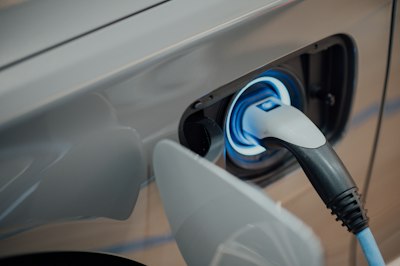

Every few months, another headline proclaims solid-state batteries are "just around the corner." Toyota announces a breakthrough. QuantumScape shares spike. BMW unveils a prototype. Yet your local dealership still sells EVs with the same lithium-ion technology from a decade ago. What's the real story behind solid-state batteries, and when—if ever—will they actually reach production vehicles?
The Fundamental Limits of Lithium-Ion
To understand why solid-state matters, we must first acknowledge where current technology plateaus. Lithium-ion batteries have improved remarkably since Sony commercialized them in 1991—energy density has tripled, costs have fallen 97%. But we're approaching theoretical limits.
The Liquid Electrolyte Problem
Conventional lithium-ion batteries use a liquid or gel electrolyte to shuttle ions between electrodes. This design creates several inherent compromises:
Inherent Li-ion Limitations
- Flammability: Organic liquid electrolytes can combust if cells are damaged or overheated
- Dendrite formation: Lithium metal deposits grow through liquid, causing short circuits
- Temperature sensitivity: Performance degrades below 0°C and above 45°C
- Parasitic reactions: Side reactions consume electrolyte over time
- Voltage limits: Liquid electrolytes decompose above ~4.3V per cell
These aren't engineering problems to be solved—they're fundamental chemistry constraints. No matter how clever Tesla's 4680 cell design or CATL's cell-to-pack integration, the underlying electrochemistry imposes hard ceilings.
How Solid-State Batteries Work
Replace the liquid electrolyte with a solid ceramic, polymer, or sulfide material, and suddenly many constraints disappear. The solid electrolyte acts simultaneously as the ion conductor and the separator—a dual function that enables fundamentally different battery architectures.
Lithium-Ion (Current)
- Graphite anode limits capacity
- Liquid enables dendrite growth
- Requires cooling systems
Solid-State (Future)
- Lithium metal = 10x capacity
- Solid blocks dendrite growth
- Wider temperature tolerance
The Three Solid Electrolyte Families
Oxide Ceramics
Examples: LLZO (Lithium Lanthanum Zirconium Oxide), NASICON-types
Pros: Extremely stable, high voltage tolerance, non-flammable
Cons: Brittle, poor electrode contact, expensive manufacturing
Leaders: QuantumScape, Solid Power
Sulfide Glass
Examples: Li₆PS₅Cl (Argyrodite), Li₁₀GeP₂S₁₂
Pros: Highest ionic conductivity, processable at lower temps
Cons: Air-sensitive, produces H₂S if exposed to moisture
Leaders: Toyota, Samsung SDI
Polymer Composites
Examples: PEO-based, single-ion conductors
Pros: Flexible, easier manufacturing, lower cost potential
Cons: Lower conductivity, requires elevated temperatures
Leaders: Blue Solutions (Bolloré), Ionic Materials
The Performance Leap: What Solid-State Enables
When industry experts talk about solid-state being "transformative," they're not exaggerating. The performance improvements aren't incremental—they're categorical.
| Performance Metric | Current Li-ion | Solid-State Target | Improvement |
|---|---|---|---|
| Energy Density (Wh/kg) | 250-300 | 500-600 | 2x |
| Volumetric Density (Wh/L) | 650-750 | 1,000-1,200 | 1.5x |
| Fast Charge (10-80%) | 25-40 min | 8-12 min | 3-4x |
| Cycle Life | 1,000-1,500 | 5,000-10,000 | 5-7x |
| Operating Temp Range | 0°C to 45°C | -30°C to 100°C | Much wider |
| Fire Risk | Low (managed) | Near zero | Eliminated |
What This Means for Real-World Driving
600+ Mile Range
Double energy density in similar pack size means a Tesla Model 3 equivalent could travel 600 miles on a charge. Road trips without charging stops become reality.
Fill-Up Speed Charging
Ten-minute charging from 10-80% makes EVs genuinely competitive with gas station stops. The "charging anxiety" narrative evaporates.
All-Weather Performance
Solid electrolytes maintain conductivity in extreme cold. Norwegian winters and Arizona summers become non-issues for EV range.
20-Year Battery Life
With 5,000+ cycles and minimal degradation, solid-state batteries could outlast the vehicles they power. Second-life and resale values transform.
The Race: Who's Leading Solid-State Development
Billions of dollars are flowing into solid-state research. The competitive landscape spans established automakers, battery giants, and ambitious startups—each betting on different chemistries and manufacturing approaches.
Toyota
Most Patents WorldwideApproach: Sulfide-based solid electrolytes, in-house development since 2008
Investment: $13.5 billion through 2030
Timeline: Limited production 2027, mass production 2030
Claims: 1,200km range, 10-minute charging demonstrated in prototypes
Credibility: Holds 1,300+ solid-state patents—more than any other company
QuantumScape
Volkswagen-backedApproach: Proprietary ceramic separator, lithium-metal anode
Investment: $300M from Volkswagen, $3B+ market cap
Timeline: Sample production 2024, commercial 2026-2027
Claims: 80% charge in 15 minutes, 800+ cycles demonstrated
Samsung SDI
Production PrototypeApproach: Sulfide electrolyte, 900Wh/L density achieved
Partnership: BMW, Stellantis supply agreements
Timeline: Pilot production 2027, mass production 2029
Claims: 600-mile range in SUV form factor
Solid Power
BMW/Ford-backedApproach: Sulfide electrolyte, uses existing Li-ion manufacturing
Investment: $130M Ford, $30M BMW
Timeline: Full-scale production line 2026
Advantage: Compatible with current battery factory equipment
CATL
World's Largest Battery MakerApproach: Condensed-matter (semi-solid) near-term, full solid-state R&D
Investment: Undisclosed, but massive R&D budget
Timeline: 500Wh/kg semi-solid in production 2024
Strategy: Incremental improvements while pursuing breakthrough
NIO (partnered with WeLion)
First to Market (Semi-Solid)Approach: 150kWh semi-solid pack in ET7 sedan
Achievement: First production vehicle with "solid-state" tech (2024)
Reality check: Still contains some liquid electrolyte
Range: 620 miles CLTC claimed
The Hard Part: Manufacturing Challenges
If solid-state batteries are so superior, why aren't they in every EV? The answer lies in manufacturing—specifically, the gulf between laboratory demonstrations and factory-scale production.
"We can make solid-state cells that perform beautifully in the lab. Making a million of them at $100/kWh is an entirely different engineering challenge."
�?Dr. Shirley Meng, University of Chicago, Former ARPA-E Program Director
The Interface Problem
Solid-solid interfaces don't maintain contact the way liquid-solid interfaces do. As batteries charge and discharge, electrodes expand and contract. In liquid electrolyte systems, the liquid flows to maintain contact. Solid electrolytes crack, delaminate, or lose contact entirely.
Mechanical Stress
Lithium metal expands 100% during charging. Solid electrolytes must either flex (polymers) or be engineered with buffer layers (ceramics). Stack pressure management becomes critical.
Processing Temperature
Oxide ceramics require sintering at 1,000°C+. This destroys conventional electrode materials. New cathode compositions and manufacturing sequences are needed.
Air Sensitivity
Sulfide electrolytes react violently with moisture, producing toxic hydrogen sulfide gas. Entire factories must operate in argon-filled dry rooms�?0x the cost of current facilities.
Scaling Thin Films
Lab cells use 20-50 micron electrolyte layers. Manufacturing these consistently over square-meter areas with no pinholes remains unsolved at scale.
The Cost Equation
Current lithium-ion cells cost approximately $100-130/kWh at the pack level. Solid-state prototypes are estimated at $400-800/kWh�?-8x more expensive. For a 100kWh EV pack, that's a $30,000-$70,000 premium.
Cost Breakdown Comparison
Manufacturing dominates solid-state costs due to specialized equipment, slow throughput, and high defect rates.
Realistic Timeline: When Will You Buy One?
Predicting technology timelines is notoriously difficult—especially for batteries, where scale-up challenges have derailed countless "breakthroughs." Here's a realistic assessment based on current progress:
Semi-Solid Debuts
NIO ET7 with WeLion 150kWh pack. CATL condensed-matter batteries in Chinese EVs. These are stepping-stones, not true solid-state.
Pilot Lines Operational
QuantumScape, Solid Power, Toyota expected to have working production lines. Validation vehicles from BMW, Mercedes, Volkswagen.
Limited Production Vehicles
First true solid-state EVs likely in $100,000+ luxury/performance segment. Think Porsche Taycan or Mercedes EQS tier. Volumes in thousands, not millions.
Premium Mainstream
If manufacturing scales successfully, solid-state options in $50,000-70,000 vehicles. Toyota's mass-production target. Cost premium of $5,000-10,000 over Li-ion equivalent.
Mass Market Potential
Cost parity with lithium-ion achievable if learning curves follow historical battery trends. Solid-state becomes default for new EV models.
Historical Reality Check
In 2017, Toyota promised solid-state EVs by 2022. Fisker claimed 2023. Dyson planned solid-state cars for 2021 (they exited automotive entirely). Timelines consistently slip. Treat all manufacturer announcements with healthy skepticism—especially those more than 3 years out.
Semi-Solid: The Bridge Technology
While pure solid-state faces manufacturing hurdles, "semi-solid" or "condensed-matter" batteries offer a pragmatic middle ground. These hybrid designs reduce liquid electrolyte content by 50-90%, capturing some solid-state benefits with existing production methods.
What's Available Now
CATL Condensed-Matter Battery
- Energy Density: 500 Wh/kg (vs ~300 Wh/kg conventional)
- Electrolyte: Highly concentrated gel, reduced liquid content
- Status: In production for aviation, automotive deployment 2024
- Application: Powering electric aircraft prototypes
NIO/WeLion 150kWh Pack
- Energy Density: 360 Wh/kg at cell level
- Range: 620+ miles (CLTC) in NIO ET7
- Status: Available as premium option in China
- Price: Roughly $40,000 premium over standard pack
ProLogium Oxide-Based Cells
- Technology: Ceramic oxide electrolyte, less liquid than conventional
- Partners: Mercedes-Benz for EQG electric G-Wagon
- Timeline: 2025-2026 vehicle integration
- Advantage: Greater safety margin, faster charging capability
The Investment Landscape
Solid-state battery development has attracted extraordinary capital—and extraordinary volatility. Understanding the investment dynamics reveals industry confidence levels and potential timeline catalysts.
Stock Performance Reality
Publicly traded solid-state companies have experienced extreme volatility. QuantumScape peaked at $130/share in late 2020 on SPAC enthusiasm—then crashed below $5 as production timelines extended. Solid Power shows similar patterns. This reflects genuine technology uncertainty, not just market speculation.
Key Investment Milestones to Watch
- Gigawatt-scale factory announcements: Moving from pilot lines to mass production signals true commercialization confidence
- Automaker volume commitments: Binding purchase agreements (not just "partnership" press releases)
- Third-party validation: Independent testing of production cells matching lab claims
- Cost disclosure: Actual $/kWh figures, not projections
What This Means for EV Adoption
Solid-state batteries could resolve nearly every major EV adoption barrier simultaneously. But their delayed arrival has implications for current buying decisions and industry strategy.
Should You Wait?
Buy an EV Now If:
- Your daily driving is under 200 miles
- You have home charging capability
- Current incentives make pricing attractive
- You'll keep the car 5-7 years (normal ownership cycle)
- Lithium-ion technology meets your actual needs
Consider Waiting If:
- You regularly drive 400+ miles without stopping
- Extreme cold significantly impacts your use case
- You're buying a $100,000+ vehicle (early adopter tier)
- You can extend current vehicle 3-5 more years
- Battery anxiety is your primary EV hesitation
The Transition Period Strategy
For most buyers, the practical advice is straightforward: buy based on today's technology and today's needs. Solid-state improvements are coming, but:
- Current lithium-ion EVs will remain functional for 10-15 years
- Solid-state will debut at significant price premiums
- First-generation solid-state may have its own teething problems
- The EV you buy today contributes to charging infrastructure that benefits future EVs
"The best EV is the one you drive, not the one you're waiting for. Solid-state will be transformative when it arrives—but that transformation is 5-10 years away for most consumers."
�?Sandy Munro, Automotive Manufacturing Analyst
The Bottom Line
Solid-state batteries represent a genuine technological leap—not incremental improvement, but fundamental transformation of what electric vehicles can achieve. The science is proven. Prototypes demonstrate 2x energy density, ultra-fast charging, and exceptional longevity.
The challenge is manufacturing. Producing these batteries at scale, with acceptable costs and yields, requires solving problems no one has solved before. Progress is real but slower than headlines suggest. The most credible timelines point to limited availability around 2027-2028 and mainstream affordability not until the 2030s.
For EV buyers today, solid-state is a reason for optimism about the technology's future—not a reason to delay purchasing. The EVs available now are excellent vehicles that meet most drivers' needs. When solid-state arrives, it will make great EVs even better. That's worth celebrating, even if the wait continues.
Key Takeaways
- Solid-state enables 2x energy density, 10-minute charging, and 20-year battery life
- Manufacturing challenges—not science—are the primary barrier to commercialization
- Toyota leads in patents; QuantumScape and Samsung SDI lead in Western development
- Semi-solid batteries bridge the gap with 400-500 Wh/kg available now
- Realistic mass-market timeline: 2030-2035 for cost-competitive solid-state EVs
- Current lithium-ion EVs remain excellent choices for most buyers today