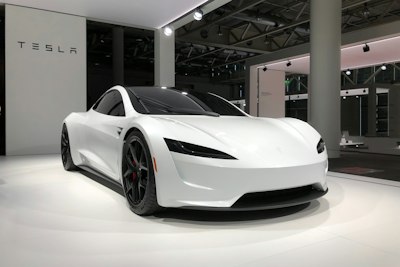

"Full Self-Driving." "Autopilot." "Super Cruise." "ProPILOT." Every automaker has a branded name for their driver assistance technology, and every marketing department implies we're on the cusp of relaxing while our cars do the work. The reality is far more nuanced—and understanding SAE autonomy levels is essential for knowing what you're actually buying.
The Marketing Problem
Let's start with uncomfortable truth: most "self-driving" features on today's cars aren't self-driving at all. They're driver assistance systems that require constant human supervision. The names are deliberately misleading.
| Brand Name | Actual SAE Level | What It Implies | What It Actually Does |
|---|---|---|---|
| Tesla Full Self-Driving | Level 2 | Fully autonomous | Driver must supervise at all times |
| Tesla Autopilot | Level 2 | Automatic piloting | Advanced cruise control |
| Mercedes DRIVE PILOT | Level 3* | Car drives itself | Highway only, under 40mph, driver takeover required |
| GM Super Cruise | Level 2+ | Enhanced autonomy | Hands-free on mapped highways only |
| Ford BlueCruise | Level 2 | Cruising hands-free | Hands-free on mapped highways, eyes on road |
The Name Game Consequences
Studies show drivers using systems called "Autopilot" or "Self-Driving" are more likely to become distracted than those using identically-functioning systems with mundane names. A 2023 AAA study found 68% of drivers using Tesla's FSD believed they could safely look away from the road for extended periods—a dangerous misconception that has contributed to fatal accidents.
SAE Autonomy Levels: The Official Framework
The Society of Automotive Engineers (SAE) defined six levels of driving automation (0-5), creating a standardized framework the industry now uses. Understanding these levels reveals how far we've come—and how far we have to go.
No Automation
Definition: Human performs all driving tasks.
Examples: Basic cars with no driver assistance beyond warnings.
Driver's Role: Everything—steering, acceleration, braking, monitoring.
Driver Assistance
Definition: System assists with steering OR acceleration/braking, not both simultaneously.
Examples: Standard adaptive cruise control (speed only), lane keep assist (steering only).
Driver's Role: Always in control, system provides single-axis assistance.
Partial Automation
Definition: System controls both steering AND acceleration/braking simultaneously. Human must supervise continuously.
Examples: Tesla Autopilot/FSD, most "self-driving" features on sale today.
Driver's Role: Monitor constantly, ready to intervene instantly. Legally responsible for all outcomes.
Critical distinction: This is where 99% of "autonomous" cars operate today.
Conditional Automation
Definition: System performs all driving tasks within specific conditions. Human must be ready to take over when prompted.
Examples: Mercedes DRIVE PILOT (Germany, California, Nevada), Honda SENSING Elite (Japan only).
Driver's Role: Can disengage from driving within operational limits. Must respond to takeover requests within ~10 seconds.
The breakthrough: Manufacturer accepts legal liability during autonomous operation.
High Automation
Definition: System performs all driving tasks within defined operational design domain (ODD). No human intervention required within that domain.
Examples: Waymo robotaxis (Phoenix, San Francisco), Cruise (suspended), Zoox.
Driver's Role: None within operational domain. System handles all situations or safely stops.
Key limitation: Geofenced—only works in mapped, approved areas.
Full Automation
Definition: System performs all driving tasks under all conditions a human could manage.
Examples: None exist. Zero. Anywhere in the world.
Driver's Role: Passenger only. No steering wheel or pedals required.
Reality check: This remains theoretical—no company has demonstrated L5 capability.
Level 2: Where Almost Everyone Is
The vast majority of "autonomous" vehicles on sale today—including Tesla's $15,000 "Full Self-Driving" package—are Level 2. This isn't a criticism; Level 2 systems can be genuinely useful. But understanding their limitations is essential for safe use.
What Level 2 Can Do Well
Highway Cruising
Maintain lane position, follow traffic speed, keep safe distance from the car ahead. Reduces fatigue on long highway drives.
Traffic Jam Assist
Stop-and-go traffic management. Car follows the vehicle ahead through congestion, reducing pedal work.
Lane Changes (Supervised)
Better systems can execute lane changes when you activate the signal, checking blind spots automatically.
Emergency Braking
Automatic braking when collision is imminent—even if the driver doesn't react in time.
What Level 2 Cannot Handle
Unexpected Obstacles
A box falling off a truck, debris in the road, or an overturned vehicle. Systems may not recognize or react appropriately.
Construction Zones
Temporary lane markers, flaggers, unusual traffic patterns. Most systems disengage or behave erratically.
Emergency Vehicles
Multiple Tesla crashes into stationary emergency vehicles highlight this critical gap.
Complex Intersections
Unprotected left turns, roundabouts, unmarked intersections—even Tesla FSD struggles significantly.
"Level 2 is best understood as an attentive co-pilot, not a replacement driver. It can help you drive more comfortably, but the moment you treat it as autonomous, you're in danger."
�?Dr. Missy Cummings, former NHTSA Senior Safety Advisor
Level 3: The Legal Breakthrough
Level 3 represents a profound shift—not primarily in technology, but in liability. For the first time, the manufacturer, not the driver, accepts legal responsibility during autonomous operation. This is why true Level 3 systems are rare and heavily constrained.
The Only True Level 3 Systems (December 2024)
Mercedes-Benz DRIVE PILOT
Available in: Germany, California, Nevada (USA)
Vehicles: 2024 S-Class, EQS
Cost: ~$5,000-8,000 depending on market
Operational Limits:
- Highway only (no surface streets)
- Maximum 40 mph (60 km/h)
- Daytime only (some markets)
- Clear weather (no heavy rain, snow)
- Pre-mapped, geofenced highways
- Driver must take over within 10 seconds when prompted
Honda SENSING Elite
Available in: Japan only
Vehicles: Honda Legend (limited production, ended)
Status: Pilot program concluded
Key Achievement:
First production vehicle with certified Level 3—but only 100 units were leased in Japan. Honda has not expanded the program.
BMW Personal Pilot L3
Status: Announced for 2024, delayed
Expected vehicles: 7 Series, i7
BMW received German approval but has not yet launched the feature commercially. Expected to have similar limitations to Mercedes DRIVE PILOT.
Why Level 3 Is Rare
Level 3 requires the manufacturer to accept legal liability for crashes during autonomous operation. This means:
- Extensive validation and testing—millions of miles in approved conditions
- Regulatory certification in each jurisdiction (different in every country/state)
- Insurance and legal framework agreements
- Strict operational domain limitations to minimize liability exposure
Most automakers find it easier to stay at "Level 2++" with driver responsibility than accept the legal and regulatory burden of true Level 3.
Level 4: Robotaxis Are Here (Sort Of)
Level 4 autonomy exists today—but not in vehicles you can buy. It powers robotaxi services operating in carefully mapped, geofenced urban areas. These systems truly drive themselves within their operational domain.
Active Level 4 Services (December 2024)
Waymo One
Operator: Waymo (Alphabet/Google)
Locations: Phoenix (metro area), San Francisco, Los Angeles
Vehicles: Jaguar I-PACE (transitioning to Zeekr)
Status: Commercially operational, no safety driver
Coverage: ~300 square miles across operating areas
Rides completed: 100,000+ weekly as of late 2024
What It Can Do:
- Navigate complex urban streets fully autonomously
- Handle most traffic situations without human intervention
- Pull over safely if conditions exceed capabilities
- Remote assistance available but rarely needed
Cruise
Operator: Cruise (GM subsidiary)
Status: SUSPENDED nationwide (October 2023)
Reason: Incident where vehicle dragged pedestrian; regulatory violations
Outlook: Attempting restart, timeline uncertain
Baidu Apollo Go
Operator: Baidu
Locations: Beijing, Shanghai, Shenzhen, Wuhan (China)
Status: Commercially operational, some with safety drivers
Scale: Largest robotaxi fleet globally by ride volume
Zoox
Operator: Zoox (Amazon)
Vehicles: Purpose-built, bidirectional pods (no steering wheel)
Status: Testing in Las Vegas, Foster City; no public service yet
Unique: Only ground-up autonomous vehicle design at scale
Level 4 Limitations
Even the most advanced robotaxis have strict boundaries:
- Geofenced: Only operate in pre-mapped, approved areas
- Weather dependent: Most suspend service in heavy rain, snow, or fog
- Remote support required: Human operators assist with unusual situations
- Speed limited: Typically capped at urban speed limits (35-45 mph)
- No highway operation: Freeway driving not yet approved
Level 5: The Dream That Doesn't Exist
Level 5—full automation in all conditions a human can handle—remains theoretical. No company has demonstrated it. No timeline exists for its achievement. Anyone claiming otherwise is speculating or selling something.
Why Level 5 Is So Hard
Edge Cases Are Infinite
A child chasing a ball. A person in a costume. An overturned truck spilling cargo. Construction worker gestures. A flock of birds. Human drivers handle thousands of novel situations through general intelligence—something AI lacks.
Environmental Variability
Heavy snow obscuring lane lines. Fog reducing visibility to feet. Sun glare blinding cameras. Flooded roads. Unpaved surfaces. Each condition requires robust handling that current systems lack.
Human Unpredictability
A cyclist making eye contact and waving you through. A pedestrian hesitating at a crosswalk. A driver gesturing to merge. Human driving relies heavily on social negotiation that machines can't replicate.
Infrastructure Variance
Faded lane markers. Missing signs. Potholes. Temporary signals. Gravel roads. Driveways. The world wasn't built for autonomous vehicles, and standardizing it is impossible.
"Level 5 requires solving general artificial intelligence—the ability to reason about novel situations the way humans do. That's not an automotive engineering problem; it's perhaps the hardest unsolved problem in computer science."
�?Dr. Amnon Shashua, CEO of Mobileye
Current Consumer Systems Ranked
We evaluated the major driver assistance systems available in production vehicles today, scoring them on capability, safety, and transparency about limitations.
| Rank | System | SAE Level | Strengths | Limitations | Score |
|---|---|---|---|---|---|
| 1 | Mercedes DRIVE PILOT | Level 3 | Only true L3, liability transfer | 40mph max, highway only, limited areas | 92 |
| 2 | GM Super Cruise | Level 2+ | Hands-free, excellent driver monitoring | Mapped highways only | 88 |
| 3 | Ford BlueCruise 1.2 | Level 2 | Hands-free, lane changes | Mapped highways only | 85 |
| 4 | BMW Highway Assistant | Level 2 | Smooth, refined behavior | Conservative, no auto lane change | 83 |
| 5 | Tesla FSD (Supervised) | Level 2 | Most capable in diverse situations | Unpredictable errors, requires constant supervision | 80 |
| 6 | Hyundai/Kia HDA2 | Level 2 | Good value, reliable | Less refined than premium rivals | 78 |
| 7 | Tesla Autopilot (Basic) | Level 2 | Included standard, capable highway assist | No auto lane change without FSD | 75 |
| 8 | Volvo Pilot Assist | Level 2 | Conservative, safe | Hands-on required, limited capability | 72 |
Why GM Super Cruise Scores High
Super Cruise isn't the most capable system in terms of scenarios handled, but it's the most honest. It only operates on 400,000+ miles of pre-validated highways, uses precise LiDAR mapping combined with GPS, has the industry's best driver attention monitoring (infrared eye tracking), and clearly communicates its limitations. It works reliably where it works—and refuses to operate where it doesn't.
Safety Data: What the Numbers Show
Automakers tout safety statistics, but context matters enormously. "10x safer than human drivers" sounds impressive—until you understand how those numbers are calculated.
Tesla's Safety Claims (Q3 2024)
Tesla's Claim:
"One crash per 7.08 million miles with Autopilot engaged vs. one crash per 955,000 miles without."
Context Missing:
- Autopilot primarily used on highways—inherently safer than urban driving
- Human driving data includes all conditions, all roads
- "Crash" definition may exclude minor collisions
- Driver interventions that prevented crashes aren't counted
- Data is self-reported and unaudited
NHTSA Investigation Findings
The National Highway Traffic Safety Administration has investigated 956 crashes involving Tesla Autopilot (2018-2024). Key findings:
- 29 fatal crashes confirmed involving Autopilot
- Pattern of crashes into stationary emergency vehicles
- Driver attention monitoring inadequate for Level 2 operation
- System encourages over-reliance through naming and marketing
Waymo's Safety Data
As a Level 4 system, Waymo provides more transparent data:
- 7+ million fully autonomous miles without a safety driver
- Zero at-fault fatalities in commercial operation
- 57% lower crash rate than human drivers in comparable conditions
- 85% reduction in injury-causing crashes
Source: Waymo/Swiss Re study published in peer-reviewed journal, third-party validated
Realistic Timeline: When Will True Self-Driving Arrive?
Predicting autonomous vehicle timelines has humbled countless experts. Elon Musk promised "full self-driving next year" every year from 2016 to 2024. Here's a more sober assessment:
2024-2026: Incremental Expansion
- Level 3 systems expand to more highways, higher speeds (possibly 60+ mph)
- More states approve Mercedes DRIVE PILOT and competitors
- Waymo expands to additional cities (Austin announced)
- Level 2 systems improve incrementally but remain Level 2
2027-2030: Robotaxi Scaling
- Robotaxi services available in 20-30 major cities globally
- Level 3 becomes standard on premium vehicles
- Level 4 personal vehicles possible in limited "L4 zones"
- Significant regulatory frameworks established
2030-2040: Widespread but Limited
- Majority of new vehicles have Level 2-3 standard
- Urban areas may have dedicated autonomous lanes/zones
- Level 4 expands significantly but remains geofenced
- Level 5 likely still unrealized for general driving
Level 5: Unknown
No credible timeline exists. Could be 2050. Could be never. Requires solving fundamental AI challenges that may or may not be solvable with current approaches.
Past Predictions vs. Reality
- Elon Musk (2016): "Full self-driving by 2017" �?Still Level 2 in 2024
- GM (2019): "Cruise robotaxis nationwide by 2020" �?Service suspended in 2023
- Ford (2017): "Level 4 vehicles by 2021" �?Shut down Argo AI in 2022
- Uber (2016): "Replace all drivers by 2030" �?Sold AV division in 2020
The Bottom Line
Autonomous driving technology has made remarkable progress—but the marketing has outpaced the reality by years. When you buy a car with "self-driving" features today, you're buying sophisticated driver assistance that requires your constant attention. True autonomy exists only in geofenced robotaxi operations and limited Level 3 systems with severe constraints.
This isn't a failure—Level 2 systems genuinely reduce fatigue and can prevent accidents. But using them safely requires understanding what they can't do. The moment you trust them more than they deserve is the moment they become dangerous.
Key Takeaways
- Almost all "self-driving" cars on sale today are Level 2—driver must supervise constantly
- Only Mercedes DRIVE PILOT offers true Level 3 with manufacturer liability (limited conditions)
- Waymo operates Level 4 robotaxis in select cities—the only scaled truly autonomous service
- Level 5 (full autonomy everywhere) doesn't exist and has no credible timeline
- Marketing names like "Autopilot" and "Full Self-Driving" are dangerously misleading
- Current systems are valuable tools when used appropriately—but not replacements for drivers