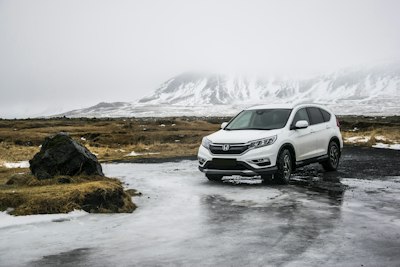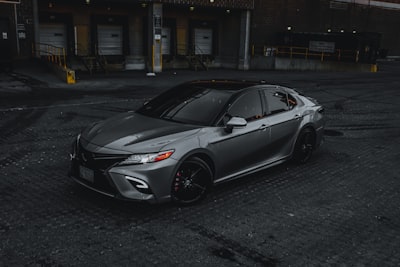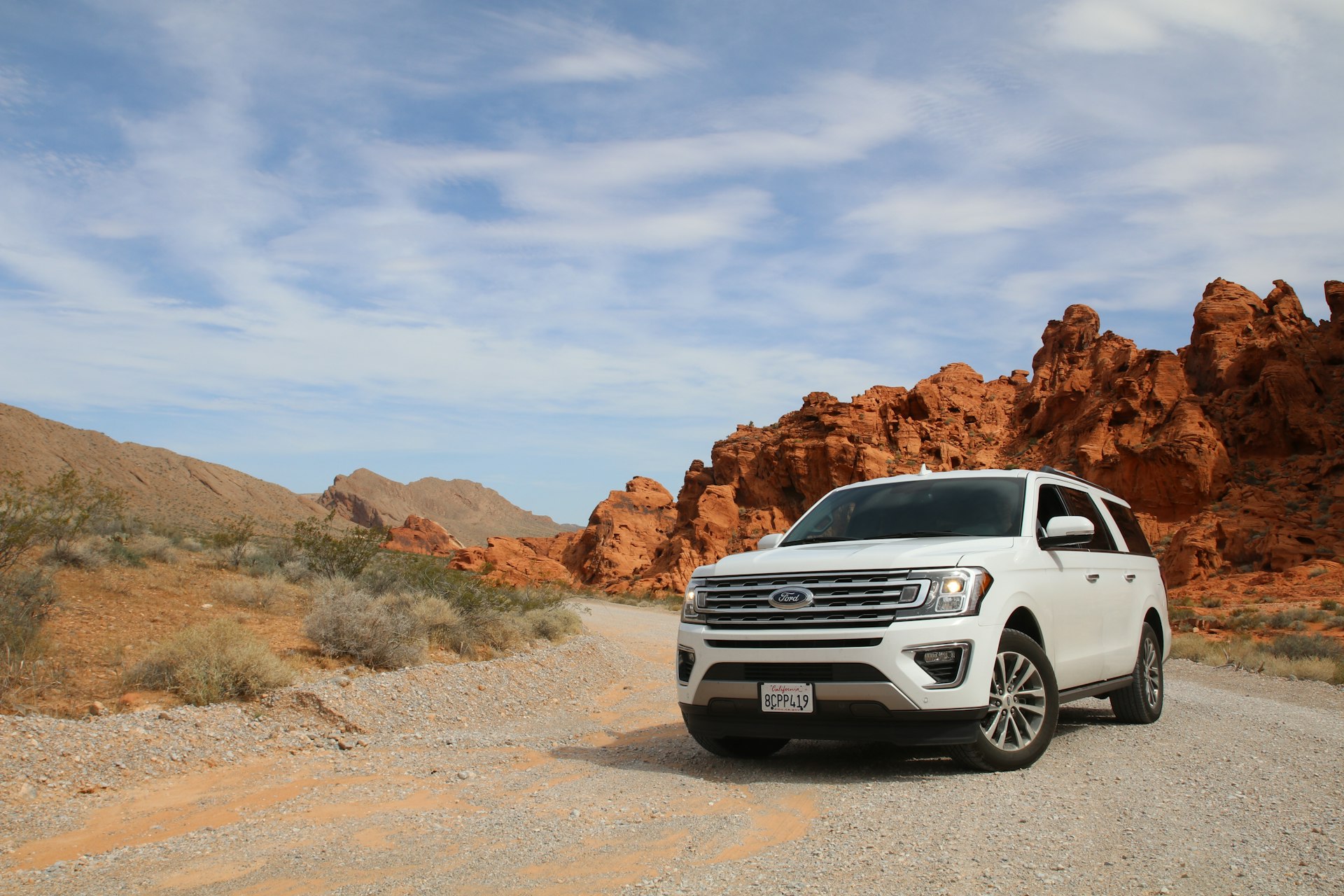

The compact crossover segment accounts for more than 4 million U.S. sales annually—more than any other vehicle category. These are the cars that families actually buy. We gathered eight top contenders for a comprehensive three-month evaluation covering everything from child seat installation to highway fuel economy. Here's what we found.
Why This Test Matters
Compact crossovers aren't exciting. They don't make enthusiasts swoon or generate YouTube hype. But they're the vehicles most American families drive every day. Getting this decision right saves thousands of dollars and years of frustration.
We tested these vehicles as families actually use them: school runs, grocery trips, road trips, car seat installations, dog hauling, and everyday commuting. Performance figures matter less than whether the cupholders fit your coffee and the trunk swallows a stroller.
Our Testing Protocol
- Each vehicle driven minimum 2,500 miles
- Real-world fuel economy over identical routes
- Child seat installation testing (infant, convertible, booster)
- Cargo measurement with standardized boxes
- Road trip evaluation (500+ miles)
- Family panel feedback (10 families, various configurations)
The Contenders
Honda CR-V Hybrid
$36,100 (Sport-L Hybrid)
America's best-selling SUV gets hybrid power standard on upper trims. All-new platform for 2023, now refined.
Toyota RAV4 Hybrid
$35,225 (XLE Premium)
The compact crossover that pioneered hybrids. Proven reliability, excellent resale value.
Mazda CX-50
$38,750 (2.5 Turbo Premium Plus)
Mazda's crossover with off-road pretensions. Premium feel, turbo power, outdoorsy styling.
Hyundai Tucson Hybrid
$38,400 (Limited Hybrid)
Bold design, packed with features. Korean hybrid tech proving competitive.
Kia Sportage Hybrid
$38,990 (SX-Prestige Hybrid)
Tucson's corporate sibling with different styling and more cargo space.
Nissan Rogue
$37,170 (SL AWD)
Completely redesigned in 2021, now mature. Zero-gravity seats, strong value.
Subaru Forester
$37,195 (Touring)
The outdoor enthusiast's choice. Standard AWD, excellent visibility, loyal following.
Ford Escape Hybrid
$38,845 (Platinum Hybrid)
Ford's latest hybrid tech. Practical but faces stiff competition in crowded segment.
Final Rankings: The Complete Leaderboard
| Rank | Vehicle | Score | Best For |
|---|---|---|---|
| 1 | Honda CR-V Hybrid | 92/100 | Overall family choice |
| 2 | Toyota RAV4 Hybrid | 90/100 | Long-term ownership |
| 3 | Mazda CX-50 | 88/100 | Driving enthusiasts |
| 4 | Kia Sportage Hybrid | 87/100 | Feature-seekers |
| 5 | Hyundai Tucson Hybrid | 86/100 | Tech & style focus |
| 6 | Subaru Forester | 84/100 | Outdoor lifestyle |
| 7 | Nissan Rogue | 82/100 | Comfort priority |
| 8 | Ford Escape Hybrid | 79/100 | Ford loyalists |
Value Analysis: What You Get for Your Money
We compared comparably-equipped models around $37,000-39,000. Here's how standard features stack up:
| Feature | CR-V | RAV4 | CX-50 | Tucson | Sportage |
|---|---|---|---|---|---|
| Hybrid Powertrain | |||||
| Wireless CarPlay/AA | |||||
| Panoramic Sunroof | |||||
| Heated/Ventilated Seats | Heated only | Heated only | |||
| Head-Up Display | |||||
| Hands-Free Liftgate |
Best Value: Kia Sportage Hybrid
The Sportage packs more features per dollar than any competitor. Ventilated seats, dual panoramic displays, remote parking—features that cost thousands extra elsewhere are standard. Kia's 10-year/100,000-mile powertrain warranty adds peace of mind.
Driving Dynamics: Which Is Most Enjoyable?
Compact crossovers aren't sports cars, but some deliver genuine driving pleasure while others feel like appliances.
Mazda CX-50
In a segment of competent-but-boring vehicles, the CX-50 stands apart. Precise steering communicates road texture. The turbo engine delivers linear, accessible power. Body roll is minimal without harsh ride quality. This is the crossover for people who actually enjoy driving.
Honda CR-V Hybrid
Honda's chassis engineers work magic. The CR-V feels lighter than its weight suggests, with responsive turn-in and well-controlled body motions. The hybrid system provides smooth, immediate torque. Not exciting, but genuinely competent.
Toyota RAV4 Hybrid
The RAV4 drives like a truck masquerading as a crossover—which some buyers want. It feels solid and substantial. The trade-off is less agility in corners. Highway stability is excellent; parking lot maneuverability less so.
The Also-Rans
The Tucson and Sportage drive competently but unremarkably. The Forester prioritizes visibility and capability over handling finesse. The Rogue is comfortable but wallowy. The Escape tries to be sporty but feels disconnected.
Interior Quality & Comfort
Material Quality Rankings
Rear Seat Comfort
This matters enormously for families. We measured legroom, headroom, and comfort for average-height adults:
| Vehicle | Rear Legroom | Rear Headroom | Comfort Rating |
|---|---|---|---|
| Honda CR-V | 41.0" | 39.5" | Excellent |
| Kia Sportage | 41.3" | 39.8" | Excellent |
| Subaru Forester | 39.4" | 40.2" | Very Good |
| Toyota RAV4 | 37.8" | 39.5" | Good |
| Mazda CX-50 | 36.7" | 36.4" | Tight |
CX-50 Rear Seat Warning
The CX-50's sloping roofline creates genuinely compromised rear headroom. Adults over 5'10" will brush the headliner. If you regularly carry tall rear passengers, look elsewhere.
Cargo Space & Practicality
We measured usable cargo space with standardized boxes, not manufacturer claims.
Subaru Forester
28.9 cu ft / 74.2 cu ftThe most usable cargo area. Nearly vertical rear glass means you can stack high. Wide opening makes loading easy.
Kia Sportage
27.7 cu ft / 74.1 cu ftExcellent cargo volume with a low, flat load floor. Clever underfloor storage.
Honda CR-V
26.9 cu ft / 76.5 cu ftBest maximum cargo with seats folded. Versatile configuration options.
Toyota RAV4
25.5 cu ft / 69.8 cu ftHigh cargo floor (due to hybrid battery) limits usability despite decent volume.
Mazda CX-50
25.6 cu ft / 56.3 cu ftThe sloping roof hurts here too. Significantly less maximum cargo than competitors.
Real-World Loading Test
We tested each vehicle with a typical family road trip load: two large suitcases, two small suitcases, a cooler, and miscellaneous bags.
- Easily fit everything: Forester, Sportage, CR-V
- Fit with careful packing: RAV4, Tucson, Rogue
- Required folding one seat: CX-50, Escape
Safety & Driver Assistance
Every vehicle tested earned IIHS Top Safety Pick or Top Safety Pick+ ratings. Standard safety features across all contenders include automatic emergency braking, lane departure warning, and adaptive cruise control.
Advanced Safety Features Comparison
| Feature | CR-V | RAV4 | CX-50 | Sportage |
|---|---|---|---|---|
| Blind Spot Monitoring | ||||
| Rear Cross-Traffic Alert | ||||
| Highway Driving Assist | Basic | Basic | Basic | HDA 2 |
| Remote Smart Parking |
Most Advanced Safety: Hyundai Tucson / Kia Sportage
Korean twins offer the most sophisticated driver assistance at this price point. Highway Driving Assist 2 can handle lane changes and navigation. Remote parking lets you park the car from outside. Honda and Toyota's systems feel a generation behind.
Fuel Efficiency: Real-World Results
We drove each vehicle over an identical 500-mile loop combining highway, suburban, and city driving.
Toyota RAV4 Hybrid
41.2 mpg observed
EPA: 40 mpg combined
Honda CR-V Hybrid
39.8 mpg observed
EPA: 40 mpg combined
Hyundai Tucson Hybrid
36.4 mpg observed
EPA: 38 mpg combined
Kia Sportage Hybrid
35.8 mpg observed
EPA: 38 mpg combined
Ford Escape Hybrid
35.2 mpg observed
EPA: 37 mpg combined
Mazda CX-50 Turbo
25.3 mpg observed
EPA: 24 mpg combined
The RAV4 Hybrid's efficiency advantage is real. Over 15,000 annual miles at $3.50/gallon, it saves approximately $400/year versus the CR-V Hybrid and $900/year versus the CX-50 Turbo.
Who Should Buy What
Best Overall
Honda CR-V Hybrid
The CR-V does nothing poorly and most things excellently. Spacious, efficient, refined, reliable—it's the default choice unless you have specific needs that push you elsewhere.
Keep It Forever
Toyota RAV4 Hybrid
If you're planning 200,000+ miles of ownership, Toyota's legendary reliability and strong resale value make the RAV4 the financial choice. It's not the most refined, but it's probably the most durable.
Driving Enthusiast
Mazda CX-50
If you actually enjoy driving and can live with compromised rear space and efficiency, the CX-50 offers an experience no competitor matches. The turbo engine transforms the segment.
Maximum Features
Kia Sportage Hybrid
More tech per dollar than anything else tested. Excellent warranty, strong cargo space, advanced safety features. The value play for feature-focused buyers.
Outdoor Lifestyle
Subaru Forester
Standard AWD, excellent ground clearance, best visibility in class. If you frequently drive in snow or venture off-pavement, the Forester's capability matters.
Comfort Priority
Nissan Rogue
The Zero-gravity seats are genuinely comfortable for long drives. If highway cruising comfort matters more than handling or efficiency, the Rogue delivers.
The Bottom Line
The 2026 compact crossover market has never been stronger. All eight vehicles tested are fundamentally competent—you won't make a mistake buying any of them. The differences are in emphasis: efficiency vs. features vs. driving pleasure vs. value.
The Honda CR-V Hybrid wins our comparison because it balances all priorities better than any competitor. It's not the most efficient, the most feature-packed, or the most fun to drive—but it's excellent in every category. For most families, that versatility is exactly what's needed.
Key Takeaways
- Best Overall: Honda CR-V Hybrid—the complete package
- Best Value: Kia Sportage Hybrid—most features per dollar
- Best Driving: Mazda CX-50—enthusiasts only
- Best Efficiency: Toyota RAV4 Hybrid�?1 mpg real-world
- Best Cargo: Subaru Forester—most usable space
- Hybrid powertrains are worth the premium in this segment
- The CX-50's rear seat compromises limit its appeal for families